Antenna Icons: A Practical Evaluation for Design Professionals
Selecting the right visual assets for a design project often involves weighing multiple factors, from file compatibility and editability to the level of detail and organizational quality. The Antenna Icons collection enters this conversation as an AI EPS illustration set that promises a structured, editable, and versatile resource for both Mac and Windows users. Rather than simply listing what the package contains, this evaluation examines the practical strengths, tradeoffs, and situational fit of the collection, so you can determine whether it aligns with your specific design goals.
Designers frequently encounter icon sets that look appealing at first glance but become cumbersome to customize or integrate into existing workflows. The decision to invest in a paid illustration set often comes down to how much time it saves, how well it adapts to different output formats, and whether the organizational structure supports efficient editing. The following sections explore these dimensions in relation to the Antenna Icons offering.
Understanding What the Antenna Icons Collection Provides
At its core, the Antenna Icons package is a curated set of vector-based illustrations delivered in multiple formats. The inclusion of AI (Adobe Illustrator), EPS (Encapsulated PostScript), and JPG files creates flexibility for different stages of a design workflow. The AI and EPS formats are particularly relevant for those who need scalable, resolution-independent graphics that can be edited at the vector level, while the JPG versions offer ready-to-use raster alternatives for quick placement.
The collection is designed to work seamlessly across operating systems. Whether you are on macOS or Windows, the file structures and formats are intended to be accessible without compatibility hurdles. This cross-platform consideration is a practical advantage for teams where designers may use different machines or for freelancers who collaborate with clients using varied setups.
From an organizational standpoint, the set emphasizes a neat file and layer structure. For anyone who has spent unnecessary time deciphering poorly labeled layers or hunting through cluttered folders, this attention to internal organization can translate directly into saved hours. The structured approach also supports easier color changes, shape modifications, and element isolation.
Key characteristics often highlighted about this collection include:
- Delivery in AI, EPS, and JPG formats for versatile use
- Compatibility with both Mac and Windows environments
- Organized file and layer hierarchy for efficient editing
- Consistent detailing across all included icons
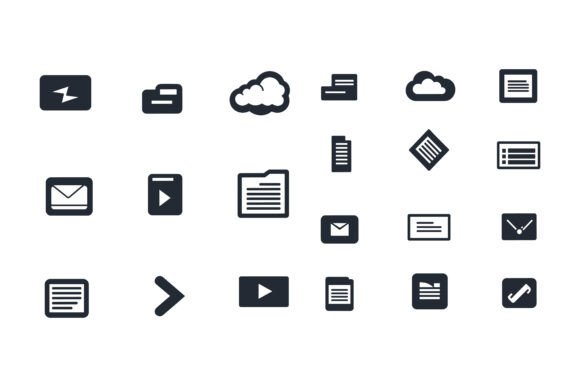
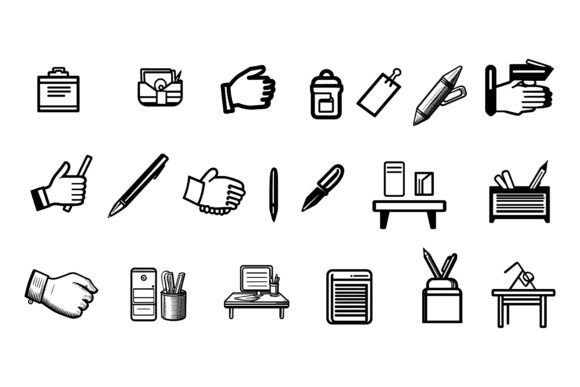
- Suitability for print, web, app interfaces, symbols, and infographics
Key Strengths That May Influence Your Decision
One of the most significant advantages of the Antenna Icons set is its emphasis on editability. Designers rarely use icons exactly as they come out of a package. The ability to change colors, adjust stroke weights, or modify individual elements without rebuilding the entire graphic is a practical necessity. Because the collection uses standard vector formats, users with software like Adobe Illustrator, CorelDRAW, Affinity Designer, or even free alternatives such as Inkscape can typically open and customize the files with relative ease.
The attention to detail and consistency is another factor worth examining. Inconsistent line weights, mismatched styling, or varying levels of complexity across an icon set can make a project feel unpolished. When an illustration set is built with uniform standards, the visual cohesion across a website, app, or printed piece tends to hold up better under scrutiny. This is especially relevant for brand-focused work where every visual element communicates something about professionalism and care.
Versatility across output mediums also stands out. The same icon that works in a mobile app interface may need to appear in a printed brochure or an infographic. Vector formats preserve sharpness at any scale, and having both AI and EPS options increases the likelihood that the files will integrate smoothly with different software pipelines. The JPG versions, while not editable in the same way, provide quick access for mockups, presentations, or non-design software environments.
For professionals working under tight deadlines, the organized structure can reduce friction. Instead of spending time cleaning up messy files or adjusting erratic anchor points, you can focus on applying the icons to your layout and moving the project forward. This efficiency gain is often the dividing line between a frustrating asset pack and one that becomes a regular part of a designer's toolkit.
Practical Considerations Before Making a Purchase
While the Antenna Icons collection offers a range of benefits, there are practical factors to weigh before deciding. Not every design project requires a paid icon set, and some situations may call for different stylistic approaches. Understanding these nuances helps set realistic expectations.
First, consider the aesthetic direction of your project. Any illustration set, no matter how well-crafted, comes with a pre-defined visual style. If that style aligns closely with your project's needs, the collection can serve as a strong foundation. If your work requires a highly specific or unconventional look, you may need to assess how much customization the icons can realistically accommodate before the effort outweighs the benefit of starting from scratch.
Second, think about licensing and usage terms. The ability to edit and modify icons for client work, commercial products, or personal projects depends on the permissions granted by the seller. Clarifying these terms before purchase prevents complications later, especially if the icons will appear in high-visibility applications or be distributed as part of a larger product.
Third, evaluate the scope of the collection. Does the set contain enough variety to cover the range of concepts you need to communicate, or might you need to supplement it with additional resources? A cohesive set is valuable, but if it addresses only a fraction of your required iconography, you may find yourself mixing styles in a way that compromises overall design consistency.
Additionally, while the collection is described as suitable for print, web, symbols, apps, and infographics, the specific output requirements of each medium can differ. Print projects often demand CMYK color profiles and higher resolution considerations, while web and app work relies on RGB and sometimes SVG exports. Verifying that the included files meet the technical specifications of your target medium can save time during production.
When Antenna Icons May Be a Strong Fit
There are certain scenarios where a collection like Antenna Icons aligns particularly well with project demands. Designers working on multi-platform brand systems often benefit from having a unified icon library that can be adapted for different touchpoints without losing visual coherence. The editability of vector files supports color adjustments to match brand palettes, and consistent detailing reinforces a polished brand identity.
For UI and UX designers, having a source of icons that can be modified for different states, sizes, and interaction contexts is valuable. Well-organized layers make it easier to isolate components for prototyping tools or to export assets in multiple resolutions. The availability of EPS files provides a bridge for teams that need to bring assets into older or specialized software environments.
Freelance designers and small agencies may also find the collection useful when they need to deliver high-quality work across varied client industries without spending excessive time creating custom icons from scratch. The balance of ready-to-use JPG files and fully editable vector sources means you can respond quickly to different client requests while retaining the flexibility to tailor the output.
Projects involving infographics and data visualization represent another natural fit. Icons in this context need to be clear, consistent in weight, and easily color-coded. The structured editing features of the Antenna Icons set support the kind of iterative refinement that data-heavy presentations often require.
When Alternatives May Be Worth Considering
There are equally valid situations where exploring other options might better serve your needs. If budget constraints are a primary concern, the growing landscape of free and open-source icon sets offers substantial quality. Many free resources provide SVG and PNG formats under permissive licenses, and while they may lack the organizational polish of a paid collection, they can be entirely sufficient for smaller or internal projects.
Designers who need an exceptionally large icon library might find that a single themed set, no matter how well-executed, does not cover the breadth of concepts required. In such cases, subscription-based icon platforms or larger, more generalized packs may offer greater overall value despite individual icons potentially being less stylistically unified.
Projects with specialized visual language needs—such as highly technical diagramming, medical illustration, or niche industry representations—may require iconography that falls outside the scope of a general-purpose set. Custom illustration work, whether done in-house or commissioned, might be the more appropriate path in these scenarios.
It is also worth considering the learning curve associated with editing vector files. While the collection is designed for easy customization, users who are less comfortable with vector editing software might initially find the process less straightforward than anticipated. In such cases, pre-edited raster formats or icon customization tools with simpler interfaces could be a more accessible starting point.
Factors to Weigh in Your Evaluation Process
Making a confident decision about the Antenna Icons collection ultimately comes down to aligning the set's characteristics with your practical requirements. Here are some factors that can guide your evaluation:
- Project timelines: If time savings from a well-organized, editable set justify the cost, the value proposition strengthens.
- Design tool compatibility: Confirm that your preferred software can fully handle AI and EPS files without conversion issues.
- Consistency needs: If visual uniformity across dozens of icons is critical, a curated collection often outperforms cobbled-together free resources.
- Customization frequency: The more you anticipate needing to tweak colors, shapes, or sizes, the more the editability factor matters.
- Output diversity: Projects spanning print and digital benefit from formats that support both worlds without quality loss.
Approaching the decision with these criteria in mind helps move the evaluation beyond surface-level appeal and toward a practical assessment of whether the collection will genuinely support your workflow and output standards.
Final Thoughts on Integrating Antenna Icons Into Your Work
The Antenna Icons AI EPS illustration set presents itself as a thoughtfully organized, editable, and versatile resource for designers who need consistent vector-based iconography across different platforms and media. Its strengths in file structure, cross-platform compatibility, and detail consistency address common pain points that designers encounter with less polished asset packs. The ability to modify colors and shapes without unnecessary complexity is a practical advantage that can directly impact project efficiency.
At the same time, the collection is not a universal solution. Designers should weigh its stylistic fit, licensing terms, and coverage against the specific demands of their projects. In many cases, the set may serve as a reliable foundation that reduces repetitive work and maintains visual standards. In others, alternatives—whether free resources, broader libraries, or custom illustration—may align more closely with project constraints and creative direction.
Ultimately, the decision rests on whether the practical benefits of organization, editability, and consistency translate into meaningful value for the work you do. By evaluating the Antenna Icons collection through this lens, you position yourself to choose design assets that genuinely support your goals rather than simply adding to your toolbox.