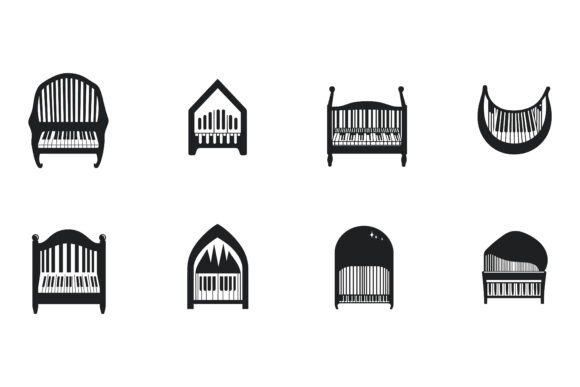
Evaluating Baby Crib Vector for Print: A Designer’s Decision Guide
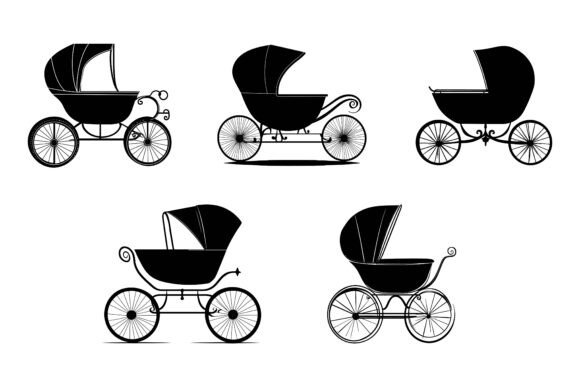
When a project calls for a clean, professional baby crib graphic, designers often turn to pre-made vector illustrations to save time and maintain visual quality. A Baby Crib Vector for Print asset is not just a single image; it’s a carefully built collection of scalable, editable graphics offered in industry-standard formats like AI, EPS, and JPG. These files are intended for use across printed materials, digital screens, and branded communications. Instead of viewing such a resource as a simple download, it’s more helpful to evaluate it as a tool—one that brings specific strengths to the table while also requiring thoughtful consideration of your project’s unique demands.
What Exactly Is This Collection?
At its core, this illustration set provides a ready-to-use vector graphic of a baby crib, but the value lies in how it’s constructed. The package includes AI (Adobe Illustrator) and EPS files—both fully editable vector formats—alongside a high-resolution JPG for quick placement. The files are organized with a neat layer structure, making it straightforward to isolate elements of the crib, adjust stroke weights, or recolor individual parts without starting from scratch. Because the design was created with attention to detail and consistency, it avoids the rough edges or unexpected clipping paths sometimes found in less polished stock art. Compatibility notes confirm it is designed for Mac and Windows users, removing one potential workflow friction point for mixed-environment teams.
Why Might Someone Choose a Pre-Made Crib Vector?
Designers and small business owners look for assets like this for several practical reasons. First, time is often the most limited resource. Creating a realistic or stylized crib from scratch can take hours, especially if the illustration must maintain perfect symmetry, smooth curves, and print-ready color separations. A ready-made solution allows that time to be redirected toward layout refinement, copywriting, or client communication. Second, control matters. Unlike a flat raster image that becomes pixelated when enlarged, vector files can scale to any size without quality loss, which is critical for items ranging from tiny product labels to large-format signage. The ability to edit, change colors, and modify icons easily gives you the flexibility to align the crib with an existing brand palette or nursery theme without compromising visual cohesion.
Benefits That Go Beyond the Graphic Itself
Evaluating the collection reveals several layers of benefit worth considering.
- Print and Digital Hybrid Use: The inclusion of both vector and raster formats means you can place the graphic directly into a print layout in Illustrator or InDesign while also using the JPG for a website mockup or social media post. The consistent design across file types reduces rework.
- Organized Structure for Efficiency: A neatly organized file and layer structure may sound minor, but it significantly reduces the time needed to understand how the illustration is built. This is especially valuable when you hand off files to another team member or revisit them months later.
- Perfection in Details: High-quality stock vectors often suffer from misaligned anchor points or uneven gradients. A set that emphasizes perfection in details and consistency gives you peace of mind that the output will look professional under close scrutiny, whether printed on textured paper or displayed on a retina screen.
- Application Versatility: The same base crib vector can be repurposed for symbols, apps, infographics, and web elements. When you need a simplified icon version, you can remove intricate details or unify shapes into a single flat color. The editable nature supports this kind of creative repurposing effortlessly.
Tradeoffs and Realistic Expectations
While the collection offers convenience and polish, a balanced evaluation also acknowledges where it may not be the ideal fit. A pre-made baby crib graphic, no matter how detailed, is not a custom illustration. If your brand identity demands a highly unique, hand-drawn style or a specific emotional tone that cannot be achieved by recoloring an existing design, a stock vector might feel generic. In such cases, hiring an illustrator or creating a bespoke illustration remains the stronger choice. Additionally, users who do not own vector-editing software like Adobe Illustrator may struggle to unlock the full potential of the AI and EPS files; while the JPG provides immediate usability, it sacrifices the scalability and editability that make vectors so valuable.
There’s also a subtle learning curve involved. Even with a well-organized file, editing complex vector artwork cleanly requires some experience. Changing colors is straightforward, but altering the shape of the crib to look significantly different—such as converting a traditional design to a modern minimalist one—can become time-consuming and may inadvertently introduce inconsistencies. The promise of editing “so easily according to your needs” is most accurate for adjustments like color swaps, scaling, and isolating elements, rather than dramatic structural changes.
When This Collection Is a Strong Fit
Consider the following scenarios where a Baby Crib Vector for Print collection aligns particularly well with project goals.
Freelance graphic designers who regularly create nursery art prints, baby shower invitations, or birth announcement cards will appreciate having a versatile crib asset that can be quickly adapted to each client’s theme. A single purchase can yield dozens of variations by simply changing colors and swapping accompanying decorative elements. Similarly, small business owners running online shops for printable wall decor benefit from a reliable, print-safe graphic that won’t degrade when customers download and print at varying sizes. The neat layer structure also makes it easy to incorporate matching typography without fighting with the illustration.
Product packaging designers for baby goods—like bedding sets, diaper boxes, or furniture assembly instructions—value vector files for technical precision. The suitable for print assurance means the design will reproduce clearly on cardboard, fabric labels, or plastic wrap, provided the output setup follows professional specifications. For mobile app developers or web designers building parenting-related platforms, the crib icon can serve as a user interface element; the editability allows it to be simplified into a crisp, recognizable symbol that remains readable at small sizes.
When Alternatives May Be Worth Exploring
Not every project calls for this type of asset. If your work demands an exclusive, never-before-seen visual, a stock crib vector—no matter how polished—might appear in other designs. This could dilute a luxury brand or a high-end nursery photography service that thrives on absolute originality. In such cases, commissioning a custom illustrator or exploring a vector subscription that grants you exclusive rights to each download offers more differentiation. Projects that require multiple distinct crib styles, rather than variations of a single design, may also find a subscription-based vector marketplace more economical in the long run.
If your primary workflow relies on free, open-source tools like Inkscape or Gravit Designer, verify file compatibility thoroughly. While EPS is widely supported, some layer naming conventions and effects from Adobe Illustrator may not translate perfectly, potentially requiring extra cleanup. For quick-and-dirty low-resolution web graphics, a free PNG from a stock photo site might suffice, but those lack the full print capability and editability that form the core value of this collection.
Practical Decision-Making Insights
When deciding whether to invest in this illustration set, ask yourself a few clarifying questions. What is the primary use case? If it’s a one-time print project that needs rapid turnaround, the combination of JPG for placement and vector for final output offers a clear efficiency gain. How much creative control do you truly need? If the provided crib design already matches your aesthetic direction, the value proposition is high. On the other hand, if you anticipate extensive reworking of the base shape, the time saved might be smaller than expected.
Examine the specifics of the file organization. A collection that is neatly organized, file, and layer structure reduces frustration during tight deadlines. You can quickly locate the background, the crib spindles, the mattress, and any shadow layers to recolor or hide them individually. This level of control is especially helpful when integrating the crib into a larger composition, such as a nursery scene including other vectors where color harmony is essential.
Also assess the long-term reuse potential. A crib vector is a fairly timeless subject; it can easily be recycled for seasonal campaigns, new product lines, or client projects years from now. In that light, the one-time purchase becomes a durable tool rather than a single-use expense. However, keep in mind that design trends evolve. If the illustration follows a very specific stylistic trend that might look dated quickly, consider whether its structured file makes it easy to modernize by swapping colors or simplifying details.
Making the Final Choice
A Baby Crib Vector for Print collection, like the one described with AI, EPS, and JPG formats, robust layer organization, and cross-platform compatibility, sits at the intersection of convenience and professional quality. It empowers you to produce print-ready materials and web graphics without sacrificing the ability to make meaningful adjustments. For many designers, content creators, and businesses, this blend of immediacy and control is exactly what solves a recurring need. By weighing the benefits against the inherent limitations of any pre-made asset, you can decide whether it will serve your current and future projects—or whether a more tailored approach would deliver the originality your work demands.