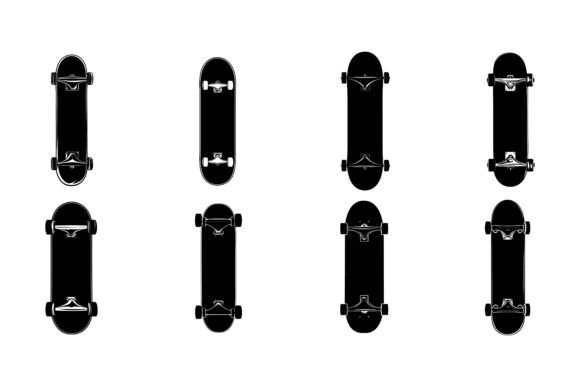
Skateboard Icon Vector Set: Versatile Graphics for Modern Creative Projects
Finding the right visual elements to communicate energy, movement, and street culture can slow down any project. The Skateboard Icon Vector Set solves that problem by giving you a collection of clean, editable skateboarding illustrations ready to drop into your work. Whether you are designing a flyer for a local skate shop, building a mobile app for sports enthusiasts, or creating classroom materials that connect with younger audiences, these icons bridge the gap between concept and polished output.
What makes this particular set worth a closer look is the attention to practical file management and editability. You get AI and EPS vector formats along with a JPG preview, meaning you can work across Illustrator, Photoshop, or any compatible design software on a Mac or Windows machine. The layered structure stays organized so you are not hunting through dozens of unnamed paths just to change a wheel color. Every icon is structured neatly, which matters when deadlines are tight and you need to customize quickly without breaking the composition.
Who Actually Needs Skateboard Icons
On the surface, skateboard graphics seem niche. But think about how often movement, youth culture, individuality, and urban aesthetics appear in commercial and personal projects. A Skateboard Icon Vector Set becomes relevant the moment you need to represent action sports, outdoor recreation, or a rebellious brand identity without commissioning custom illustrations from scratch.
Small business owners running skate shops or streetwear brands will find immediate use. Instead of generic stock photos that feel disconnected from authentic skate culture, these icons provide stylized consistency. A deck graphic on a loyalty card, a truck icon on a website navigation menu, or a wheel symbol printed on packaging tape all come together visually because the set maintains uniform line weight, proportions, and detailing. Customers notice when branding feels cohesive. Icons that share the same visual DNA create that impression without extra effort.
Marketers promoting events benefit just as directly. A skateboarding competition poster needs visual hierarchy, and icons can anchor different sections like registration details, sponsor logos, and schedule blocks. Because the vectors are fully editable, you can recolor elements to match sponsor brand guidelines or event theme colors in seconds. No need to request alternate versions from a designer. You open the file, select the layer, and adjust.
Where These Icons Show Up in Everyday Work
Realistically, people use vector icons in more places than they initially imagine. The Skateboard Icon Vector Set adapts to print and digital environments equally well. For print projects, the high-resolution vector output means you can scale a deck icon to poster size without pixelation. That is critical when producing storefront signage, event banners, or merchandise like t-shirts and hoodies where blurry graphics ruin perceived quality.
On the digital side, web designers can integrate skateboard icons into navigation elements, hero section accents, or interactive infographics without worrying about load times. SVG exports from AI or EPS files stay lightweight compared to raster images. A blog about extreme sports can use these icons as category markers or call-to-action buttons, giving the interface personality without overwhelming the content. App developers building fitness trackers for skateboarders or trick-tutorial platforms can pull icons for onboarding screens, achievement badges, or menu icons, maintaining a native feel that stock emoji-style graphics cannot match.
Educators and content creators represent another practical audience. A physical education teacher preparing a unit on balance sports might use skateboard icons in worksheets or slide decks. The icons become visual shorthand, helping students quickly identify sections about equipment, safety gear, or techniques. For YouTube creators producing trick breakdowns or product reviews, these vectors can appear in video thumbnails, lower-thirds graphics, or end screens without worrying about copyright flags that come with pulling images from search engines.
Real Scenario: Building a Skatepark Fundraiser Campaign
Imagine a community group fundraising to build a local skatepark. The campaign needs a visual identity that appears on social media posts, printed flyers at coffee shops, a donation website, and maybe even t-shirts for contributors. With the Skateboard Icon Vector Set, one volunteer with basic design skills can unify all those materials. They pull the same icon for a deck silhouette, recolor it to match the campaign's palette, and use it consistently. The editable layers let them add text inside the deck shape for a logo lockup. On the website, the icon sits beside the donation button. On the t-shirt, it prints cleanly at any size. The result looks far more professional than a patchwork of borrowed images, and the community builds trust in the campaign because the presentation feels legitimate.
Why Editability Changes Your Workflow
Not all vector sets are built with real editing in mind. Some come as flattened single-layer files that technically open but require tedious node-by-node adjustments to change a color. The Skateboard Icon Vector Set addresses this with a neatly organized file and layer structure. Each element, whether a wheel, truck, deck graphic, or grip tape pattern, sits on its own named layer. You can isolate a component, recolor it, resize it independently, or remove it entirely without affecting the rest of the icon.
This matters in professional contexts where branding guidelines change or clients request revisions. You can take a standard truck icon, swap its default silver for a brand's orange accent color, and have the updated asset ready in under a minute. Designers working on multiple client projects can create variations of the same icon family without rebuilding anything. A skateboard icon that serves a youth sports camp in bright greens and yellows can be recolored to muted tones for a minimalist apparel brand the same afternoon.
Consistency across the set also means you do not have to check whether different icons play well together visually. The creator paid attention to uniform stroke weights, corner radii, and overall proportions. When you place a deck icon next to a wheel icon and a truck icon, they read as parts of the same system. That cohesion is easy to overlook until you work with poorly constructed sets where each icon feels like it came from a different designer. Here, the details lock together, which reduces friction during layout.
Practical Applications Across Different Industries
Let's map out where these icons find actual daily use beyond the obvious skateboarding niche. The versatility of well-designed vector graphics means they cross into unexpected territories.
Print shops and merchandise producers can use the icons for client projects that need quick turnaround. A customer walks in wanting custom skateboard deck graphics for a birthday gift. The print shop opens the vector set, pulls a few icons, arranges them into a composition, adds the recipient's name, and sends the file to production. No illustrator needed, no licensing headaches.
Social media managers running accounts for sports brands, lifestyle publications, or travel companies can incorporate skateboard icons into Instagram story templates, carousel posts, or pinned highlight covers. The clean geometric style photographs well on screens and pairs with modern sans-serif typography that dominates platform-native content. Since the icons come with JPG previews, they can quickly test placements before committing to vector exports.
Infographic designers covering topics like the economics of action sports, skatepark accessibility by city, or the evolution of skateboard technology can use icons as data markers or section dividers. A deck icon scaled to represent different deck sizes in a comparison chart communicates information faster than a bar graph alone. Readers process visuals before text, and icons that match the subject matter reduce cognitive load.
Freelance illustrators can treat the set as a base kit, modifying and combining icons into more complex scenes. A park illustration might start with several deck and wheel icons arranged naturally, then built upon with original background elements. This hybrid approach saves hours compared to drawing every component from scratch while still producing original final work.
What to Consider Before Downloading
Before you click purchase and start designing, think about how you plan to use the Skateboard Icon Vector Set in your specific context. Check that your design software supports AI and EPS formats natively. Most modern tools do, including Adobe Illustrator, Affinity Designer, CorelDRAW, and even free alternatives like Inkscape. The JPG preview is a helpful bonus for quick drag-and-drop mockups, but serious editing requires the vector originals.
Consider your color workflow. These icons arrive in a default palette, but the editable layers mean you can apply global color adjustments or map them to brand swatches. If you work in RGB for digital projects, make sure to set your document color mode accordingly before exporting. For print projects bound for CMYK presses, preview how your chosen colors convert to avoid unexpected shifts. The vectors handle both environments, but your output settings determine the final appearance.
Think about scalability needs early. A common mistake is assuming a vector icon designed for a 64-pixel app interface will automatically look great blown up to billboard proportions. The Skateboard Icon Vector Set handles large-scale reproduction because the paths are clean and the detailing is proportioned thoughtfully. Still, you should inspect the icons at your target output size. Subtle details that work beautifully at screen resolution may need slight thickening for large-format print visibility. The organized layers let you adjust stroke weights globally if needed.
File organization habits will serve you well here. Before modifying anything, duplicate the original file and work from the copy. Rename layers to match your project's naming conventions. This seems like basic advice, but in collaborative environments where multiple team members may access the assets, clear naming and version control prevent costly rework.
How Different Users Extract Value
A marketing team at a beverage company sponsoring a skateboarding event uses these icons differently than a solo blogger reviewing skate shoes. The marketing team needs assets that scale across email headers, landing pages, printed banners, and social cuts. They pull the same icon set for all touchpoints, ensuring the campaign feels unified even though different designers handle different deliverables. The editable nature means the web designer can output SVG for the landing page while the print designer exports a high-resolution TIFF for the banner, both from the same source file.
A teacher creating a physics lesson about momentum and friction might use skateboard icons to make abstract concepts tangible. Students who struggle with textbook diagrams respond differently when they see a familiar object like a skateboard deck used to illustrate force vectors. The teacher can annotate the icon, add arrows and labels, and print worksheets that feel approachable rather than academic in the worst sense.
A startup building a skateboarding trick library app needs icons that remain readable at small sizes for mobile interfaces. The Skateboard Icon Vector Set works because the designs prioritize clarity. Wheels read as wheels even at 24 pixels. Decks retain their distinctive shape without collapsing into unrecognizable blobs. The details are intentional rather than excessive, which is exactly what functional app design demands.
Making the Decision
When you weigh whether this set fits your project, focus on what you are actually trying to achieve. If you need authentic skateboarding visuals that you can modify without friction, the value becomes clear. You save the hours you would spend researching reference images, sketching concepts, and refining vectors. You avoid licensing complications that arise from using found images. You gain a flexible asset that serves you across multiple projects and formats, from web and apps to print and merchandise.
The Skateboard Icon Vector Set is built for people who want to start designing now, not after a lengthy setup process. The Mac and Windows compatibility, the layered file structure, and the consistent detailing all point toward practical use rather than theoretical features. Whether you are a seasoned designer, a small business owner, an educator, or someone exploring creative projects for the first time, having reliable, editable graphics on hand changes how quickly you can move from idea to finished piece.
So if you have been piecing together visuals from disparate sources or settling for icons that do not quite match your vision, this collection offers a straightforward path to better results. The buy-now-and-start-using proposition is literal. Download the files, open them in your preferred software, and begin building the layouts, interfaces, prints, or teaching materials you have been planning. The icons are ready. The only missing piece is what you decide to create with them.