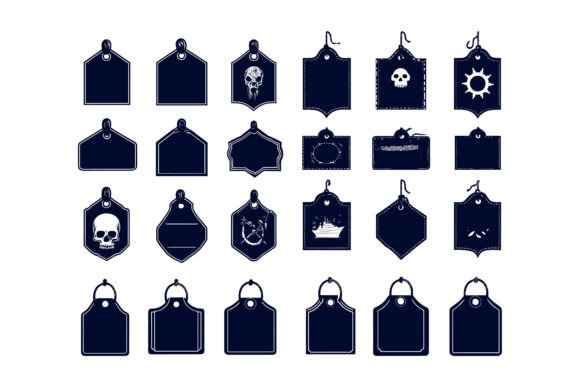
Skull Label Vector Icon: A Practical Graphic Asset for Diverse Design Workflows
The search for a reliable, editable vector illustration often leads to compromises — either the file is poorly organized, the details lack precision, or the format doesn't integrate well with existing software. A skull label vector icon that addresses these practical concerns can save hours of rework and maintain visual consistency across projects. This type of icon typically combines a stylized skull motif with label or badge elements, making it useful for branding, packaging, apparel, and digital interfaces where a bold, recognizable symbol is needed. The version discussed here comes as part of a curated AI EPS illustration set, designed to fit into professional and semi-professional workflows without unnecessary friction.
What the File Package Actually Includes
When you acquire a skull label vector icon from this collection, you aren't getting just a single flattened image. The download includes a well-structured set of file formats that make sense for real-world use. The primary files are AI (Adobe Illustrator) and EPS (Encapsulated PostScript), which are industry standards for scalable vector artwork. A high-resolution JPG preview is also included, allowing for quick placement in mockups, presentations, or documents without opening vector software. This combination covers both the editability required by designers and the immediate usability that non-designers on a team might appreciate.
The product has been prepared with both Mac and Windows users in mind, eliminating those frustrating moments when a file won't open correctly because of operating system quirks. Fonts, if used, are typically outlined, and effects are expanded to minimize cross-platform surprises. For a skull label vector icon, this cross-compatibility is particularly valuable if the design will eventually be handed off to a print shop or a developer who may not be working on the same platform you are.
Layered Organization and the Importance of a Clean File Structure
One of the most underappreciated aspects of a good illustration asset is how its layers and groups are named. A skull label vector icon might contain the skull itself, surrounding banners, secondary text placeholders, and decorative elements. If these are all lumped into a single layer with generic default names, isolating just the skull to recolor it becomes a tedious chore. The description emphasizes a neatly organized file and layer structure, which suggests that each distinct part is logically grouped and labeled. For a busy graphic designer or a small business owner trying to make quick tweaks, this organization means you can dive into the file, select what you need, and adjust it without hunting through hundreds of unlabeled paths.
Consistency in this structure also matters. If you purchase multiple icons from the same collection, you'll benefit from a uniform approach to layering, naming conventions, and color usage. This predictability lets you apply the same modifications across different icons in a batch, keeping your branding cohesive. A skull label vector icon used on a t-shirt should look like it belongs to the same family as one used on a website badge or loyalty card stamp.
Detail, Precision, and Visual Consistency
Vector artwork can easily suffer from imprecise anchor points, unbalanced curves, or uneven line weights. A skull label vector icon intended for professional use should exhibit thorough attention to detail. That means smooth, intentional bezier curves for the cranium and jaw, symmetrical eye sockets if the design is symmetrical, and clean intersections between the skull and any label elements. The claim of "perfection in details and consistency" may sound like typical marketing, but in practice, it translates to less time spent fixing wobbly lines or adjusting alignments before the artwork can go live.
This level of precision also affects how the icon scales. A skull label vector icon might appear on a small mobile app button at 32×32 pixels, or it might be blown up to cover the back of a jacket. In both cases, inconsistent curves or odd anchor points become glaringly obvious. A meticulously constructed vector file holds its quality at any size, and that reliability is what separates a professional asset from a throwaway download.
Editing Flexibility: Colors, Shapes, and Beyond
One of the core strengths mentioned is how easily you can edit the icon, change colors, and modify it according to your needs. A skull label vector icon rarely works in every context straight out of the box. You may need to recolor it to match a brand palette, remove the label to use just the skull, or adjust the thickness of outlines for a different visual weight. Because the file comes in AI and EPS formats, these changes are straightforward in Adobe Illustrator, Affinity Designer, CorelDRAW, or even free tools like Inkscape.
Even for non-designers, this flexibility has practical value. A marketer might need to quickly swap a black skull for a white one to use on a dark background in a social media post. A small craft business owner might want to change the label's accent color to match the season. Because the file is vector-based, there is no resolution loss, and the edits remain crisp. The organized layers further support this, letting you isolate the exact element to recolor without affecting the whole composition.
Where a Skull Label Vector Icon Fits into Real Projects
Icons like this aren't limited to obvious domains such as biker merchandise or Halloween promotions. A skull label vector icon can serve as a strong visual anchor for a craft beer bottle label, a coffee shop loyalty card with a slightly rebellious vibe, or the emblem for a sports team. Its mix of the skull motif with a label or badge shape gives it a seal-like quality, making it suitable for certification marks, limited-edition stamps, or even apparel hang tags.
- Print applications: T-shirt graphics, stickers, product packaging, and poster designs all benefit from the sharp, scalable lines of a vector icon. The black-and-white or limited-color palette often associated with skull icons keeps printing costs manageable.
- Digital and web use: Websites, mobile app icons, and social media assets can use the skull label vector icon as a profile badge, a category symbol, or an in-app achievement icon. The inclusion of a JPG preview makes it easy to drop into a web layout for client approval without loading up vector software.
- Infographics and presentations: An icon like this can add personality to data visualization when you need to indicate danger, toxicity, or even just a "tough" metric. Its consistency means it won't jar with other clean vector elements in the same graphic.
- Symbols and signage: For internal wayfinding or labeling in creative workspaces, a skull label vector icon can be adapted into warning signs, storage labels for hazardous materials (in a stylistic, not literal sense), or even restroom door indicators for themed venues.
Performance in Team and Multi-user Environments
Not everyone who needs to use a graphic asset is a trained designer. In a small business, the owner might need to drop the icon into a Canva template, while a freelance designer might need to deeply edit the file for a client. The combination of AI, EPS, and JPG accommodates these different skill levels. The neatly organized layers also reduce the risk of someone accidentally deleting the wrong element during a quick edit. For marketing teams with a brand kit, a skull label vector icon can be integrated once, correctly recolored, and then shared as a template, minimizing future mistakes.
Long-Term Value and Reusability
A well-made vector icon isn't a one-off purchase; it becomes a reusable asset. Over months or years, you might use the same skull label vector icon for a seasonal product line, a series of blog post featured images, or as a secondary logo element. Because the file is editable and consistent, each reuse can be tailored without starting from scratch. The file structure also makes it easier to archive and retrieve later. If you revisit the icon after six months, clear layer names like "skull outline," "banner background," or "text placeholder" will immediately make sense, whereas a flattened, disorganized file would require a frustrating re-familiarization process.
Who Gains the Most from This Kind of Asset
While anyone can technically download and use a vector icon, certain groups will find particular value in the specific combination of features this skull label vector icon offers:
- Freelance graphic designers and illustrators: They can use it as a base element, customizing extensively to fit a client's branding, saving hours of drawing a skull from scratch while maintaining originality.
- Small business owners and entrepreneurs: Those who manage their own merchandise, packaging, or promotion can achieve a professional look without hiring a custom illustrator for every small graphic need.
- Marketing professionals and content creators: Quick, editable graphics for campaigns, email headers, or social media can be produced in-house, speeding up turnaround times.
- Print-on-demand sellers and crafters: The vector format works seamlessly with cutting machines, screen printing setups, and digital printing services, making it a practical addition to a product design toolkit.
Potential Drawbacks and Realistic Expectations
No single graphic asset fits every scenario perfectly. A skull label vector icon, by its very nature, carries a specific aesthetic — it's edgy, bold, and not suited for all brands. If your project requires a highly realistic, detailed skull illustration, this stylized label icon may feel too simplified. Additionally, while the editability is a strength, it does require at least a passing familiarity with vector editing software to make meaningful changes. A complete beginner might still need to watch a tutorial on how to recolor an EPS in their program of choice. Also, while the JPG preview is handy, it is not a substitute for the vector file in any production environment; its purpose is purely for drafts, mockups, and reference.
The file's value also depends on how well it integrates with your existing design assets. If all your other graphics are hand-drawn or have a distinctly different style, this icon may stand out awkwardly unless you deliberately modify its stroke style or add texture. That said, because it is fully editable, such stylistic adjustments are within reach for a competent user.
Practical Observations from a Day-to-Day Usage Standpoint
In practice, a skull label vector icon of this type becomes a go-to for projects where time and precision matter equally. Consider a small coffee roaster preparing a seasonal dark roast. They could drop the icon into their label template, change the banner color to a deep burgundy, add their roast name in the placeholder text area, and have a product label ready for the printer within an hour. Or a fitness apparel brand might use the skull as a sleeve patch design, scaling it up, removing the label, and converting the outline to a distressed style with a few extra steps. The key enabler is the initial quality and organization of the file, which doesn't fight against the user's modifications.
Why File Format Variety Matters
Not every computer runs the latest Adobe Creative Cloud. The inclusion of EPS as a format is a nod to legacy compatibility and a bridge to older RIP systems used in commercial printing. AI files keep all the native Illustrator editing capabilities intact, such as global colors, symbols, and effects that can be adjusted non-destructively. JPG, while not editable in the same way, acts as a universal preview. A team member without vector software can still see exactly what the skull label vector icon looks like, communicate feedback, and use it in their email signature or a Word document mockup until the final version is ready. This trio of formats reduces friction across a typical mixed-software work environment.
For Mac and Windows users, the compatibility claim is tested in the real world when files are shared between operating systems. Poorly saved EPS files can break or misinterpret fonts, but because this set is designed with cross-platform use in mind, such issues are minimized. The focus on a clean layer structure also means that when opened in different vector applications, the element grouping remains navigable, even if some advanced features are translated differently.
Integrating the Skull Label Vector Icon into a Broader Brand System
A single icon doesn't build a brand, but it can serve as a consistent recurring element. When combined with other icons from the same collection, the uniform style, color palettes, and level of detail create a cohesive visual language. For instance, a bar or restaurant could use the skull label vector icon for their strong cocktails, a different icon for their food menu, and another for their merchandise, all sharing the same illustration style. This consistency projects professionalism and deliberate design thinking, even if the business owner isn't a trained designer. The editable nature means you can establish a master template with your brand's colors and simply apply it to each new icon you acquire from the collection.
Ultimately, a skull label vector icon like this is less about flashy features and more about doing the fundamentals right: clean construction, sensible file organization, flexible formats, and cross-platform reliability. For the professional, entrepreneur, or creator who regularly needs a bold, adaptable graphic that won't cause technical headaches, this type of well-prepared resource pays for itself in the time it saves and the quality it maintains across diverse applications. It won't replace a custom illustration for the most unique branding needs, but for the vast middle ground of day-to-day design tasks, it's a solid, practical choice.