The Modern Value of Football Players, Men and Women Illustrations in Visual Design
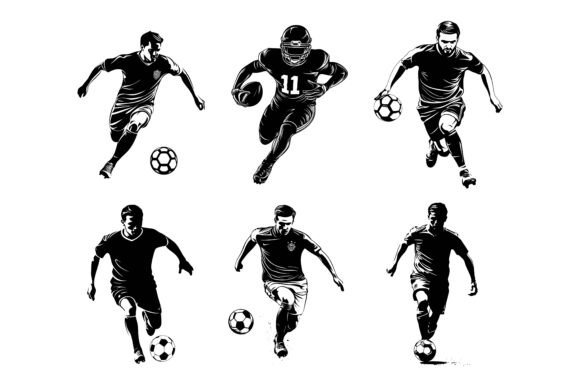
Visual communication has shifted dramatically in recent years. Static, one-size-fits-all graphics no longer meet the demands of brands, publishers, and content creators who need speed, flexibility, and authenticity. Within this evolving landscape, sports-themed illustration collections have carved out a significant niche, and few subjects carry the universal appeal of football. The Football Players, Men and Women AI EPS illustration set addresses a specific intersection of athletic energy, gender inclusivity, and practical design utility that many creative professionals now actively seek.
This collection represents more than a simple bundle of vector images. It reflects how modern illustration assets are being reimagined around the real workflows of designers, marketers, and entrepreneurs who operate under tight deadlines and across multiple platforms. Understanding what makes this type of resource valuable requires looking at the broader currents shaping visual content creation today.
Why Football Imagery Remains a Design Powerhouse
Football occupies a unique position in global culture. It transcends borders, languages, and demographics in ways few other activities can match. For visual communicators, this translates into an enduring demand for football-related graphics that can be deployed across websites, mobile applications, promotional materials, editorial layouts, and social media campaigns. The sport carries connotations of teamwork, determination, passion, and healthy competition—emotional resonances that brands and organizations frequently want to associate with their messaging.
What has changed is the expectation around how these graphics are packaged and delivered. Ten years ago, a designer might have purchased a single, fixed illustration of a footballer and worked around its limitations. Today, the expectation is radically different. Creators want editable, layered, and scalable assets that can adapt to varied contexts without sacrificing quality. The Football Players, Men and Women set fits into this new paradigm by providing vector-based content that users can reshape according to project-specific needs—changing uniform colors, adjusting proportions, isolating individual elements, or recombining components to create entirely new compositions.
Inclusivity as a Design Requirement, Not an Afterthought
One of the most telling shifts in visual media is the growing insistence on authentic representation. Audiences notice when imagery reflects only a narrow slice of the population. Sports illustration, historically, has skewed heavily toward male figures. The deliberate inclusion of both men and women football players in a single, cohesive style is no longer a niche consideration—it is becoming a baseline expectation for brands, educational publishers, nonprofits, and media outlets that serve diverse communities.
Designers working on projects for schools, community programs, fitness apps, or international campaigns increasingly need football visuals that depict both genders with equal energy and professional polish. The Football Players, Men and Women collection acknowledges this reality directly. By unifying male and female athletes within the same illustration style and quality standard, it eliminates the awkward visual inconsistency that occurs when designers are forced to source figures from disparate, mismatched sets. This stylistic coherence matters immensely when building brand guidelines, app interfaces, or printed collateral where every element must feel part of a single visual family.
How File Format Choices Shape Creative Freedom
Beneath the surface of any illustration collection lies a technical layer that determines how freely the assets can be used. The inclusion of AI and EPS formats in this set speaks directly to professional workflows. Adobe Illustrator files preserve full editability, allowing designers to dive into individual anchor points, paths, and layers. EPS serves as a universal vector exchange format that plays well with older software, cross-platform environments, and print production pipelines. The companion JPG files offer quick-access raster versions for immediate placement in presentations, mockups, or web drafts.
This multi-format approach acknowledges that creative work rarely follows a single linear path. A freelancer might start a project by dragging JPG previews into a client pitch deck, then later open the AI file to customize player uniforms with brand colors, export individual figures as SVG for a responsive website, and finally embed the refined vectors into a printed brochure layout. Each format plays a role at a different stage, and the absence of any one would create friction. The neatly organized file and layer structure mentioned in the collection's description reduces the time spent hunting through unnamed layers or nested groups—a practical benefit that compounds across multiple projects.
Editing Flexibility and the Rise of Brand-Specific Customization
Generic stock imagery often fails at the final mile because it cannot accommodate the specific color palette, stylistic nuance, or compositional need of a given brand. The ability to edit, recolor, and modify illustrations easily has moved from being a nice bonus to a core requirement. Marketing teams need football graphics that match their campaign's exact shade of blue. App developers need iconography that aligns with their interface's stroke weight and corner radius conventions. Print designers need to adjust line thickness for different paper stocks and viewing distances.
The Football Players, Men and Women AI EPS set is built around this editing flexibility. Vector artwork, by its nature, allows non-destructive color changes, path modifications, and element isolation. A designer working on a youth football league's website can take a base illustration, swap the kit colors to match the league's actual teams, remove the background for transparent PNG export, and scale the result to function equally well as a hero image and a mobile navigation icon. This adaptability extends the useful lifespan of the asset far beyond a single campaign or medium.
Cross-Platform Suitability and Responsive Design Demands
Modern visual content must travel across an unprecedented range of surfaces and devices. A football illustration used in a mobile fitness app will appear at radically different sizes and resolutions than the same graphic printed on a large-format event banner. Vector illustrations, by definition, resolve this tension. They scale infinitely without pixelation, maintaining crisp edges at any dimension. This makes the AI and EPS foundation of the collection inherently suitable for print, web, symbols, apps, and infographics simultaneously.
Consider a practical scenario: a sports marketing agency pitching a campaign concept to a client. They need football player imagery that can appear in a responsive email newsletter, a set of Instagram story templates, a printed direct mail piece, and an in-stadium digital display. Purchasing separate assets for each medium would be inefficient and expensive. A single vector-based collection that covers all these applications from day one streamlines both the creative process and the budget conversation. The collection's Mac and Windows compatibility further ensures that team members on different operating systems can collaborate without file conversion headaches.
Organized Structure as a Productivity Multiplier
Experienced designers know that the internal organization of a resource file can make or break a project timeline. Opening a vector file to find hundreds of unnamed layers, ungrouped elements, and inconsistent naming conventions forces the designer into a time-consuming cleanup process before any actual creative work can begin. The emphasis on a neatly organized file and layer structure addresses this pain point directly. Logical grouping of elements, clearly labeled layers, and consistent naming allow users to locate specific components—an individual player, a particular pose, a background element—within seconds rather than minutes.
This organizational discipline also facilitates modification. When a designer needs to adjust the skin tone across multiple figures or update the style of football boots throughout the set, a well-structured layer hierarchy makes such batch changes straightforward. The time saved accumulates meaningfully across the lifecycle of the asset, especially for agencies and in-house teams that revisit and revise materials season after season.
Meeting the Moment: Illustration in an AI-Augmented World
The design industry is currently navigating a complex relationship with AI-generated imagery. While generative tools offer speed, they often lack the precision, editability, and legal clarity that professional projects demand. High-quality, human-crafted vector illustrations occupy a renewed position of strength in this environment. They provide clean anchor points, intentional compositions, and a verifiable chain of creative authorship—qualities that matter for trademark-sensitive branding work and commercial licensing.
Collections like Football Players, Men and Women bridge the gap between the convenience creatives expect and the reliability their clients require. The illustrations arrive as fully editable AI and EPS files, ready to be customized, combined, and deployed without the artifacts, licensing uncertainties, or stylistic inconsistencies that can accompany generated imagery. For professionals who need to stand behind their visual choices, this reliability translates into confidence when presenting work to stakeholders.
Practical Applications Across Industries
The versatility of football player illustrations extends well beyond obvious sports-related contexts. Educational publishers use such graphics in textbooks and e-learning modules to illustrate concepts of teamwork and physical health. Healthcare organizations incorporate them into patient engagement materials promoting active lifestyles. Municipal governments feature them in community recreation guides and park signage. Fintech apps sometimes employ sports metaphors in onboarding flows and achievement badges.
An entrepreneur launching a local football coaching business might use the illustrations across a website hero section, business cards, social media templates, and vehicle decals—maintaining visual consistency throughout. A nonprofit running a girls' football empowerment program can select the female player figures, recolor them in the organization's brand palette, and build a complete campaign identity around them. The perfection in details and consistency across the set means these varied applications all reinforce rather than dilute the intended message.
Why Attention to Detail Separates Professional Assets from Amateur Alternatives
The phrase "perfection in details and consistency" is not mere marketing language—it describes a quality threshold that experienced buyers have learned to scrutinize. Amateur illustration sets often reveal themselves through inconsistent line weights, awkward anatomical proportions, mismatched lighting directions, or varying levels of detail across figures. These flaws become glaringly obvious when illustrations are enlarged for print or placed alongside professionally designed typography and photography.
Consistency across a set of football player illustrations means that the male and female figures feel like they belong to the same visual universe. The rendering style, the level of anatomical abstraction, the thickness of outlines, and the color palette all hold steady from one file to the next. This allows designers to mix and match figures across different compositions without the result appearing piecemeal or disjointed. For brands that prize visual cohesion, this consistency is non-negotiable.
The Changing Economics of Creative Resources
Subscription fatigue and the desire for asset ownership are reshaping how creative professionals acquire visual resources. Many designers and small business owners are moving away from monthly subscription models that grant temporary access to vast but unfocused libraries, preferring instead to purchase specific, high-quality collections that they can own outright and reuse indefinitely. The Football Players, Men and Women set aligns with this preference. A one-time purchase provides permanent access to files that can be used across unlimited projects, edited freely, and integrated into long-term brand systems without recurring fees.
This ownership model makes particular sense for niche subject matter. A general stock subscription might offer a handful of football illustrations scattered across thousands of unrelated assets. A dedicated collection delivers depth and variety within the specific theme, making it far more useful for projects that need multiple poses, perspectives, and player configurations.
Integrating Illustration into Modern Workflows
The gap between "having illustrations" and "using illustrations effectively" often comes down to how easily the assets slot into existing tools and processes. Files designed with both Mac and Windows compatibility acknowledge the mixed-OS reality of most creative workplaces. AI and EPS formats import smoothly into Adobe Creative Cloud applications, Affinity Designer, CorelDRAW, and numerous other vector editing environments. JPG previews drop directly into presentation software, word processors, and web-based design tools without conversion steps.
This friction-reducing design philosophy extends to how the illustrations perform under real project pressures. A marketing manager preparing last-minute social content for a World Cup-themed promotion doesn't have time to troubleshoot file compatibility issues. A freelance designer juggling multiple client deadlines needs assets that simply work when opened. The quiet engineering decisions behind file format selection and layer organization pay dividends in these pressured moments.
The visual language of football continues to evolve alongside the tools and expectations of the people who create with it. Illustrations that combine technical editability, gender-inclusive representation, cross-platform versatility, and meticulous craft quality are well-positioned to serve the current generation of creative projects. Whether integrated into a global brand campaign, a local community initiative, or a digital product interface, well-executed football player illustrations carry an energy and accessibility that few other subjects can match. For the designers, marketers, and entrepreneurs shaping visual culture today, resources built with their actual workflows in mind are worth paying attention to. So what are you waiting for? Buy now and start using this awesome illustration to bring your next project to life with the dynamic spirit of football, captured in artwork that adapts to your vision.