Vector Sketch Illustration of Truck: From Rough Concept to Refined Creative Asset
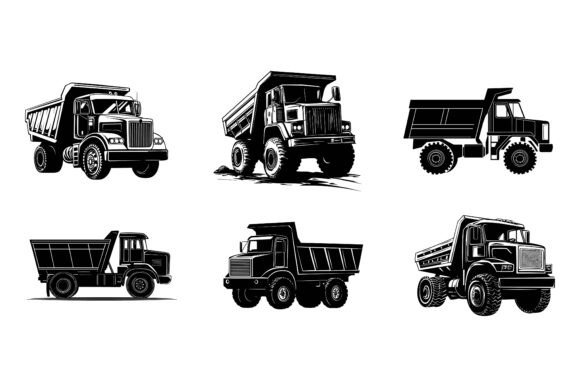
Many design projects begin with a simple idea—something bold, industrial, or rooted in motion. For countless creators, a Vector Sketch Illustration of Truck serves as that perfect starting point. It’s not just a picture of a vehicle; it’s a carefully constructed graphic that brings together artistic expression and technical precision. Whether you’re crafting a logistics company’s branding, designing an app interface for fleet management, or building an infographic about transportation trends, the right illustrative element can instantly communicate strength, reliability, and purpose.
In working with hundreds of digital assets over the years, I’ve seen how a single well-made illustration transforms a layout. The difference between a generic clipart shape and a professionally layered, editable Vector Sketch Illustration of Truck is night and day. This isn’t about promoting a product—it’s about understanding what makes an image truly useful in the real world, how it saves you time, and why certain formats and organizational choices matter more than you might expect. Let’s walk through that together.
What Exactly Is a Vector Sketch Illustration of a Truck?
At its core, the phrase describes a digital drawing of a truck—often with a hand-drawn, blueprint, or stylized line-art feel—created using vector paths rather than pixels. Unlike a photograph or a rasterized sketch, this artwork is built from mathematical curves and lines. That means it can be scaled to billboard size or shrunk to a mobile icon without losing a single detail. The “sketch” aspect implies a certain artistic looseness, a sense of movement and character that feels more human than a rigid technical diagram. Yet because it’s vector, it also offers the cleanliness and versatility that modern designers need.
Think of it as the best of both worlds: the warmth of a pencil stroke combined with the power of infinite resolution. A Vector Sketch Illustration of Truck might depict a classic pickup, a heavy-duty semi, a delivery van, or even a conceptual futuristic hauler—all captured with an illustrative, often monoline or engraved aesthetic. This type of asset doesn’t just fill space; it tells a story about transport, commerce, and the open road.
Why the Vector Format Changes Everything
If you’ve ever tried to enlarge a low-resolution JPG and watched it turn into a blurry mess, you already understand part of the value. But vector files, typically in AI (Adobe Illustrator) and EPS (Encapsulated PostScript) formats, go much further. They preserve editable paths, separate layers, and adjustable anchor points. This isn’t just about scaling; it’s about control.
When a Vector Sketch Illustration of Truck is delivered as an AI or EPS file, you can open it, click on the truck’s body, and change its color from red to navy blue in seconds. You can isolate the wheels, adjust the stroke weight of the outline, or even remove the background entirely. A companion JPG is often included for quick previews or immediate use in presentations, but the real magic lives inside the vector originals. This dual approach—providing both the editable source files and a flat image—accommodates everyone from a seasoned graphic artist to a small business owner updating their own website.
Designed for Cross-Platform Creators
Professional design environments vary widely. Some teams work entirely on Mac systems with the latest Adobe suite, while others rely on Windows machines and open-source alternatives. A well-prepared collection accounts for this by organizing files in universally compatible formats and using straightforward naming conventions. There’s no hidden platform lock-in—an EPS file from a Windows laptop opens identically on a Mac, and the AI file remains fully functional across systems if you have the software. This harmony removes friction, especially when collaborating with contractors or handing off assets to a client.
Features That Make a Truck Illustration Set Truly Practical
Not all digital illustrations are created equal. Through experience, certain traits consistently separate a frustration-inducing download from an asset you’ll return to project after project. When evaluating a Vector Sketch Illustration of Truck set, these are the qualities I look for—and the ones that genuinely save hours of work.
- Neatly organized file and layer structure: Opening a vector file should feel like walking into a tidy workshop. Layers might be named “Outline,” “Body Color,” “Wheels,” “Shadow,” and “Highlights.” This lets you toggle visibility or isolate elements without hunting through hundreds of anonymous paths. Good organization isn’t a luxury; it’s a necessity for efficient editing.
- Perfection in details and consistency: A Vector Sketch Illustration of Truck should have balanced proportions, smooth curves, and intentional line endings. Details like door handles, grille textures, and tire treads aren’t afterthoughts—they demonstrate craft. Moreover, consistency across multiple trucks in a set (if it’s a pack) means you can use them together in a single infographic without jarring style changes.
- Multi-purpose suitability: The same truck sketch can work beautifully in a printed flyer, a website hero image, a symbol for a mobile app, or as part of an intricate infographic. Because it starts as a vector, outputting to any medium involves zero quality loss.
- Ease of modification: Color schemes change, branding guidelines evolve. With well-built vector files, you aren’t stuck with the initial palette. Select the truck’s body, pick a new hue from your brand palette, and the sketch instantly adapts. Reshape elements, remove details, or combine it with typography—the artwork becomes yours to mold.
Real-World Scenarios Where a Truck Illustration Shines
To understand value, let’s move away from abstract specifications and into situations you might encounter tomorrow. Picture a logistics startup developing its identity. The founder needs a clean, approachable icon for the mobile app that tracks deliveries. A Vector Sketch Illustration of Truck, simplified to its essential lines, becomes the app symbol. Because it’s vector, the developer can export it at every required size for Android and iOS without degradation. Meanwhile, the marketing team uses the same artwork in larger, more detailed form on the company’s “About Us” page, perhaps adding soft shading or a sketched landscape behind it.
Consider an educator preparing a lesson on transportation and trade. Instead of fuzzy clipart, they download a sketch illustration, import the EPS into their presentation software, and break it apart to label parts of the truck—wheelbase, cab, trailer. The crisp lines remain sharp on a projector screen. The JPG version is handy for handouts. Later, a student designing a project board on supply chains uses the same asset, modifying the colors to match the school’s palette. All of this is possible because the original file was built with flexibility in mind.
In the corporate world, an HR department revamping safety manuals uses the truck illustration to create warning icons and directional signs. They adjust the stroke weight for better visibility at small sizes and change the cargo illustration to represent hazardous materials. The organized layers make it simple to delete the original cargo and insert a simple triangle symbol. Suddenly, a single purchase or download becomes a toolkit that serves multiple departments over several years.
The Creative Freedom of Easy Editing
Let’s talk frankly about something many product descriptions gloss over: the moment you need to change something and realize you can’t. It’s a sinking feeling. The value of a Vector Sketch Illustration of Truck is deeply tied to how effortless it is to make it your own. With the right source files, you can:
- Rebrand on the fly: Imagine you’ve placed the truck illustration on a warehouse uniform mockup. The client suddenly decides their primary color is orange, not blue. A few clicks in the layers panel, and the revision is done—no redrawing, no renegotiation of deadlines.
- Build variations: Need a nighttime version with glowing headlights? Duplicate the truck, add a dark background, and use the sketch’s outline to create a neon sign effect. The original paths remain intact.
- Merge with other elements: Because the sketch is often composed of clean, isolated shapes, you can drag it into a complex scene—a cityscape, a desert highway, a loading dock—without messy background removal. The transparency and layering are already handled.
This editability extends the lifespan of the asset dramatically. Rather than using it once and discarding it, you adapt it repeatedly, extracting maximum creative utility.
Choosing the Right Vector Sketch Illustration for Your Project
Not every truck illustration fits every need. When browsing collections, ask yourself these questions, which I’ve learned to prioritize through trial and error:
- Does the sketch style match the tone? A rough, scratchy sketch might suit a rugged outdoor brand, while a precise, geometric line art piece could be perfect for a corporate tech startup. The emotional projection of a Vector Sketch Illustration of Truck varies widely.
- Are the file formats truly editable? Verify that the download includes AI or EPS files, not just a flattened vector in a non-editable wrapper. Check that the layers haven’t been merged into a single object—unless you never plan to customize.
- What’s the level of detail? For a favicon or small icon, overly intricate details will become visual noise. For a large poster, you might want those intricate cross-hatching and mechanical elements. Decide early based on your primary use case.
- License and usage rights: Personal blogs, merchandise for resale, corporate branding—each may require a different license. A solid set will clearly state what’s permitted, saving you legal headaches down the road.
Getting the Most from Your Download: A Practical Workflow
Once you’ve selected a high-quality Vector Sketch Illustration of Truck, a little organization goes a long way. I recommend storing the original files in a cloud-based folder clearly labeled with the asset name and version. Never edit the original directly. Instead, open it in your vector software and immediately use “Save As” to create a working copy. Keep the layer structure unless you have a pressing reason to flatten, and use artboards to produce multiple variations side by side.
For web projects, export your final truck illustration as SVG or optimized PNGs at 2x resolution for retina screens. For print, stick with PDF or EPS exported directly from the vector file, ensuring fonts are outlined if text is included. If you’re not a designer, the JPG version can be dropped into Canva, PowerPoint, or Google Slides, but remember that resizing beyond its original dimensions will introduce pixelation. That’s the safety net of having the vector original: when in doubt, go back to the source and export exactly what you need.
Addressing Common Misconceptions and Limitations
It’s important to stay grounded. A Vector Sketch Illustration of Truck is not a magic solution for every visual problem. Sometimes a photograph is more appropriate to show exact product details. The sketch aesthetic can feel informal or playful, which may not align with a high-end luxury brand’s image. Additionally, while vector files are infinitely scalable, complex sketches with many layers and effects can become sluggish on older computers. Organizing and simplifying your artboard can help.
Another point: while the illustration is editable, significant modifications still require familiarity with vector editing tools like Adobe Illustrator, CorelDRAW, or Inkscape. If you’ve never used the pen tool, changing the outline shape of a truck might have a learning curve. However, basic color changes and layer management are very approachable, and plenty of online tutorials exist to bridge that gap. Don’t let that intimidate you—most users find that once they’ve made their first successful edit, the confidence carries forward.
Why Details and Consistency Become Your Silent Collaborators
When you’re racing to meet a deadline, you don’t want to spend 20 minutes fixing sloppy anchor points or extending lines that don’t quite meet. This is where perfection in details pays dividends. A Vector Sketch Illustration of Truck with consistently rounded caps on strokes, even spacing in grille lines, and balanced geometric construction will appear professional no matter how you use it. It becomes a silent collaborator—upholding your standard of quality without you having to micromanage every pixel.
Similarly, neat organization within the file means that when you hand the project to a colleague or external vendor, they can dive right in. The layer named “Headlights” actually contains the headlights. The group labeled “Chassis” makes sense. This intentional structure reflects a design philosophy that values the end-user’s time and sanity—a rare and appreciated trait.
Integrating the Illustration Across Diverse Media
Adaptability is a measure of true usefulness. A single Vector Sketch Illustration of Truck can live across a brand’s ecosystem:
- Print materials: Business cards, brochures, vehicle wrap designs, and large format banners all benefit from crisp vector output. The illustration maintains integrity whether it’s an inch wide or ten feet.
- Web and digital interfaces: SVGs and PNGs derived from the vector can animate with CSS, populate loading screens, or serve as clickable icons. The sketch style adds a human touch to otherwise flat UI.
- Symbols and infographics: Simplified versions can become map markers, chart elements, or safety signs. The organized layers let you extract just the wheel or the cargo area for secondary icons.
- Apps and software: From onboarding screens to achievement badges, a friendly truck icon can guide users through fleet management tools or delivery tracking apps.
Making the Right Choice for Your Creative Future
Ultimately, the decision to invest in a particular Vector Sketch Illustration of Truck comes down to how much you value flexibility, longevity, and craftsmanship in your tools. When an asset is built with the user’s workflow in mind—offering AI, EPS, and JPG formats, logical layer naming, precise construction, and true platform independence—it stops being a simple graphic and starts becoming part of your creative vocabulary. You’ll reach for it when you need to communicate motion, industry, or dependability, knowing that it won’t let you down in a high-stakes situation.
Take a moment to reflect on your next few projects. Will a recurring need for transport imagery arise? Could a stylized, editable truck strengthen your visual narrative? If the answer is yes, then exploring the kind of well-organized, meticulously crafted vector illustrations described here is a natural next step. These aren’t just files in a folder; they’re building blocks for powerful visual communication.
Don’t settle for rigid, uninspiring clipart when you can have a dynamic, layered sketch that grows with your skills and adapts to your evolving requirements. The beauty of a Vector Sketch Illustration of Truck lies in how it invites you to tinker, transform, and make it undeniably your own. And that creative freedom is what ultimately elevates any project from ordinary to memorable.